How to Practice Silence and Introspection

How to Practice Silence and Introspection

Many of us are in the throes of surviving and somehow getting through our day… we have bosses, baby-sitters, traffic, bills, spouses, in-laws to manage.  Our day starts with a to-do list of mundane items like “Buy Milk”, “Fill gas”, “Pay rent”. The more ticks we have on our list, the more we feel that we are adding value. The same routine follows day after day, week after week. Years roll on and the opportunity for a deeper life is wasted.  We are constantly doing and do not allow ourselves to be silent and to build a relationship with ourselves. There is extensive scientific research showing that silence is essential to our health and well-being.

Physical Benefits

  • Loud noises over 30 decibels increase high anxiety, stress and blood pressure. Silence lowers blood pressure and allows us to deal with life’s challenges in a better way.
  • Silence is an immunity booster… it helps our body fight off invading bacteria and other pathogens.
  • Silence lowers blood cortisol and adrenaline levels… adding 30 minutes of silence a day can change your life.
  • Silence allows for hormone regulation and interaction of the entire hormone related systems within our body.
  • Silence keeps plaque from forming in our arteries… and thus helping to prevent cardiovascular disease and strokes.
  • Silence makes us look and feel younger and at the same time have a lot more energy.

Mental Benefits

  • Silence recharges our mind. While sleep reboots the mind, silence recharges it.
  • Silence allows us to get grounded, when too many things around us are moving constantly. It helps to calm the emotions down, detach from the situation and make wise decisions.
  • Silence allows us to get out of our survival and reactive mode of living and thinking and in to a deeper and more fulfilling mode.
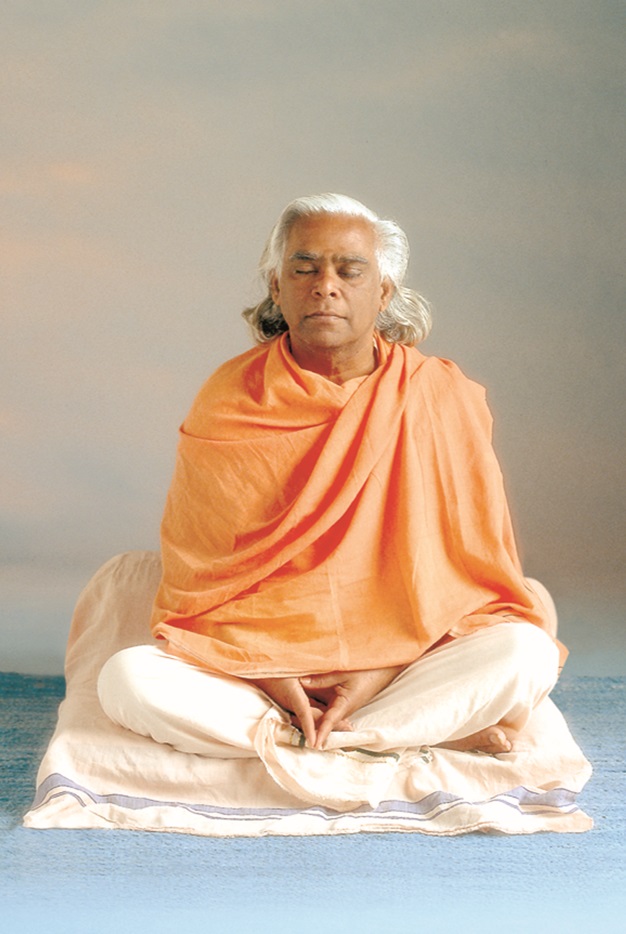
  • It is a tool for contemplation and meditation. It is meditation itself. To quiet the mind we have to get it to stop talking… and for that we have to practice being silent first.  In starting with silencing our body, specifically, our organ of speech, the mind will follow suit.
  • It allows us to be the witness of our own mind. When we introspect by being alone in solitude or retiring into a calm room for an hour, sitting quiet in a room alone, with closed eyes and watch the activities of the mind, we begin to get a glimpse of who we really are, our real goals, dreams, and ambitions.  It is like revealing the glory of the sun after the clouds covering it dissipate. Calming our mind removes the thoughts (clouds), and the spirit; our Higher Self can then shine through.

Spiritual Benefits

  • Silence makes us happy. Spending time in silence boosts brain chemistry… and increases our ability to concentrate.
  • Silence makes us appreciate life, connect with our Higher Spirit, and be more centered.
  • Silence gives us space and inspiration to ask ourselves profound questions like “who am I?” “what is the purpose of my life?” to “practice gratitude” …  We could live our entire life without ever having the time or mindset to even try to understand who we are, why we are here, what is God’s plan for us, what is our life purpose, and are we living our life according to God’s intention?
  • Considerable peace follows a period of silence. The speech energy becomes transmuted into spiritual energy (Ojas).

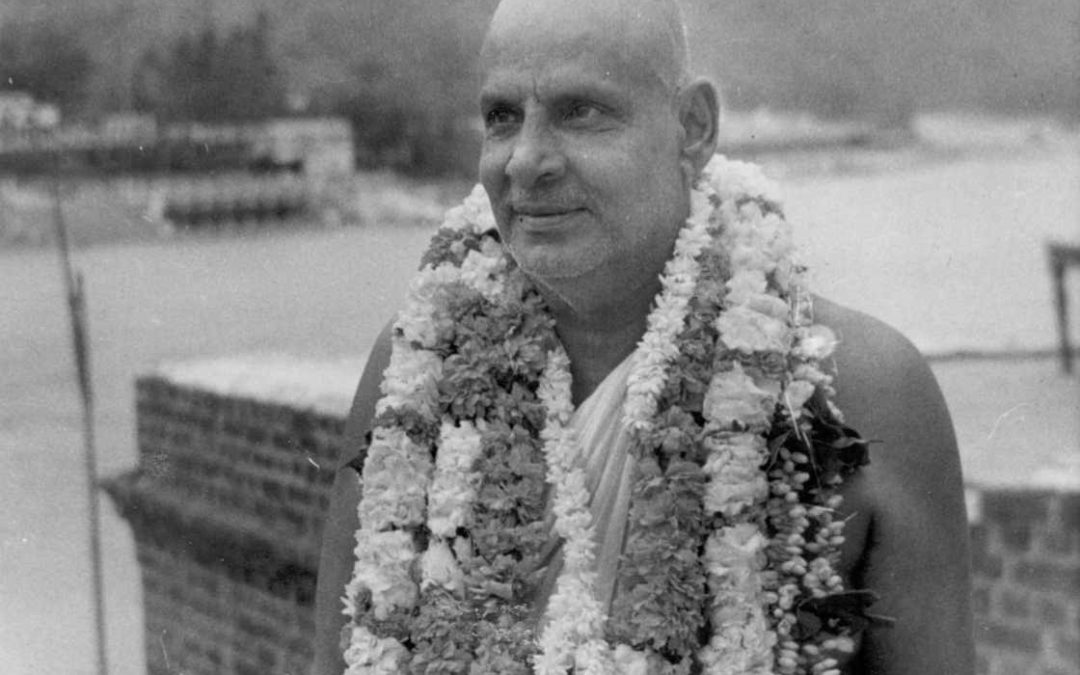
Swami Sivananda said that Silence allows serious students to do self-analysis (Find out the nature of your mind-patterns vrittis and which quality is dominant in the mind at a certain moment – sattwa –pure and calm, tamas – lethargic and lazy, or rajas – restless). It allows the practice of self-reliance: rely on yourself alone. You are your own redeemer and savior even though spiritual books and Gurus can show the path and guide you. In reality nobody can give you self-realization (Moksha). You will have to tread the spiritual path step by step by yourself.  It helps you to self-determine (Make a strong self-determination, “I will realize the Self.”)

Practice an Hour of Silence Every Day

Swami Sivananda suggests that a vow of silence (Mouna) must be practiced once a week.

  1. Schedule an hour of silence at a particular time every day.
  2. For that hour turn off the phone, TV, music and computer. Put down all books and other reading material.
  3. Light a candle to be a witness to your hour of silence.
  4. Sit quietly and rest—or engage in work that does not require your vocal, visual and auditory senses. Gentle housekeeping or gardening is excellent activities of silence, or a long walk in nature.
  5. Listen to the silence, all the time enjoying this hour-long respite from thinking, reviewing, planning, and imagining. Stay in the present moment.
  6. Breathe deeply and mindfully, bringing in the silence and expelling mental “noise.”
  7. At the end of your hour of silence, let your first word be an expression of gratitude or love; then put out the candle and go about your business.

Some Helpful Advice from Swami Sivananda when Observing Silence 

  • In the beginning, when you observe Mouna, you will find some difficulty. There will be a severe attack of thought patterns (verities) the moment you just sit quiet.  Various kinds of thoughts will arise and force you to break the silence. There are all vain imaginations and deceptions of the mind. Concentrate all energies on a divine name (mantra) will help. Make the mind fully occupied. The desire for talk and company will die. You will get peace.
  • When you take a vow of silence do your best not to assert from within, ‘I won’t talk’. This will produce agitation in the mind, because the mind wants to be heard. Simply make a determination and then remain quiet. Attend to other affairs. Do not be thinking always, ‘I won’t talk, I won’t talk.’
  • For serious spiritual students, keep a record of your progress (spiritual daily diary) to help watching the mind.
  • If it is distracted, you must remove the distracting causes one by one with patience and vigilance by suitable methods.

So, next time, someone asks you what are your plans for the evening, proudly state… “I plan to spend time in the company of myself, in silence!”

(Excerpt from Swami Sivananda teaching)

Yoga Teacher Training Course

Check out our 200-hour Yoga Alliance certified Yoga Teacher Training Courses offered twice a year in California, 3x in Vietnam, once in China and once in Japan.

Foundational Courses

Choose from upcoming courses for beginners and intermediate level students.

Yoga Vacation

Rejuvinate your body and mind. Experience and progress with daily Yoga classes. Learn the 12 basic asanas and pranayama. Enjoy daily meditation, chanting, and organic vegetarian meals.

Rejuvenate Your Being

A Yoga vacation is an ideal getaway to change perspective towards one’s life and become healthier, more relaxed and connected.

The Dynamic of Concentration and Self-Surrender

The Dynamic of Concentration and Self-Surrender

Remember, Forget

Swami Sivananda’s last instructions are, “Remember, Forget.” Remember the Divine and forget or let go, of everything else. This simple instruction summarizes the basic approaches of Yoga.

Jnana and Bhakti

On the one hand, Jnana Yoga nurtures the concentrated state of mind which is ideally focused on an uplifting object such as a divine name (mantra) or presence; and on the other hand, Bhakti Yoga is the practice of self-surrender, or letting go of our attachments: ideas and expectations, memories, concepts, and limited knowledge.

Both Jnana Yoga and Bhakti Yoga require conscious effort. The Jnana Yogi focuses the mind and attaches to a worthwhile goal, such as Knowledge or the Self. Whereas, the Bhakti Yogi releases oneself from effort, trusting in God, to relax on what already is.

Jnana practices strength

The Jnana Yogi practices to strengthen the mind, to bring stillness and calm to the mind, to be able to reflect the true picture of the Self within, which is Happiness Absolute.

Bhakti practices letting go

The Bhakti Yogi knows already that whatever we come up with in our mind is limited, and knows that we do not know the bigger picture or the will of God. Therefore, the best strategy is to let go of all preconceived ideas and to detach.

Attachments bring suffering

If you are attached to any object of this world, be it a person, an object or a circumstance, you will lose your freedom and become enmeshed in that object. Attaching oneself to the Supreme purifies all Egoistic intentions, and draws one closer to the Supreme Being, to the Pure Reality. Attachment to the Supreme will eventually give you your Self and your Freedom.

  • To practice detachment refers to our human tendency to involve ourselves in every aspect of our life
  • to treat even temporal objects as absolute truth or reality.
  • Through our attachment to objects we lose the perspective that life is but a big school to learn
  • (to remember!) that we are the Atman, that we are the Truth in all things and not some separate entity or appearance.

Detachment implies that one remains established in the Self and lets go of everything else.

Conclusion

How much we practice concentration and how much we practice self-surrender and detachment depends on one’s personality in the first place. An emotional person works it out by remembering God and by offering all of one’s emotions to the Divine, trusting that God knows best and all is happening by His will. A strong-minded person practicing Jnana Yoga, might just focus the mind on an uplifting object, meditating on the Divine, until nothing else remains.

Swami Sivananda said, “Serve the Self, Love the Self (or God), Meditate on the Self, and Realize the Self.”

Om Tat Sat

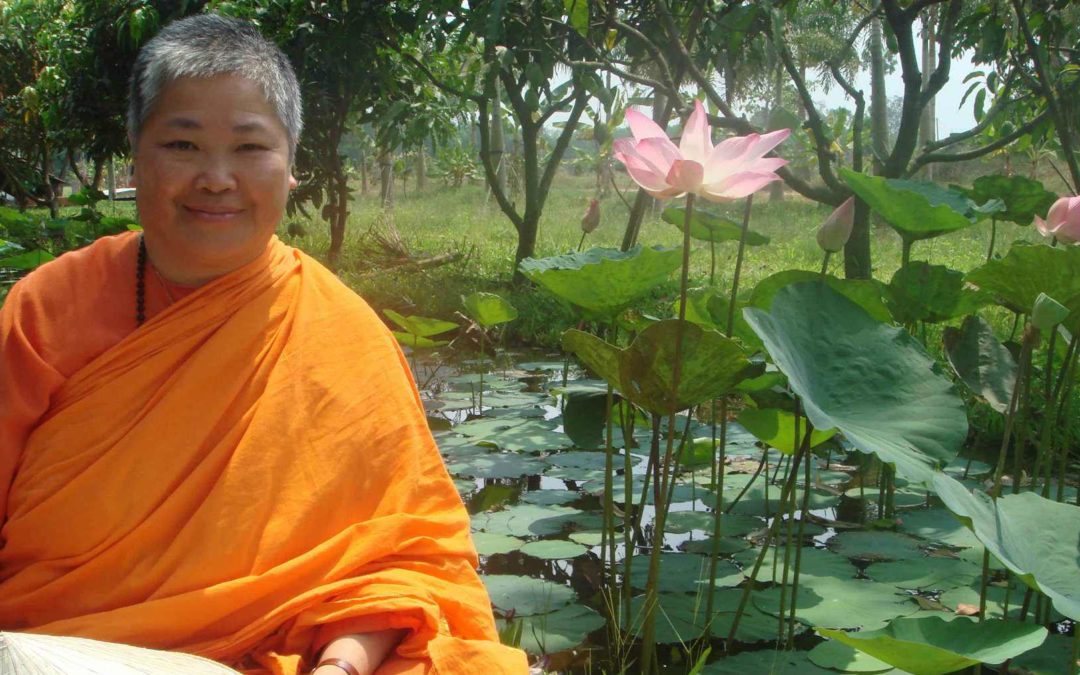
Swami Sitarmananda

Learn from the Spiritual Masters and Become Wise

Learn from the Spiritual Masters and Become Wise

In honor of Guru Purnima – celebrations in honor of the guru 

First you need to know that you do not know and someone knows. This attitude will help you to be receptive to meeting with those who have the ultimate knowledge of reality, and it will help you to be humble enough to receive the knowledge.

Desire for Knowledge

The sincere inner desire to know the Truth will lead your way in this search. With this attitude, you will seek out a teacher and be able to recognize the teacher.

It is said that the teacher appears in front of you when you are ready.

In other words, divine grace will allow you to recognize and appreciate the teacher when your sincere desire to know the truth becomes ripened.

Teacher / Student Relationship

You cannot desire to have a husband if you are not ready to be a wife and vice versa–a man cannot desire to have a wife without being ready to be a husband. Why?

Because husband/wife is a relationship and student/teacher is a relationship.  To find a spiritual teacher, you need to have the spiritual readiness to learn and to self-transform, to ultimately to surrender to the truth conveyed and embodied by the teacher you want to learn from.

It is not sufficient for you to be exposed to knowledge; you need to drink deep from it. The teacher and the knowledge might impress you but are you ready to dive into it?


The problem of misunderstanding

Aspirants are normally much involved in the external vision of themselves as being a physical body in the material world.

So in the beginning the eyes take some time to turn around to look within and begin to differentiate the “I” as distinct from the physical, seeing that there is a subtle reality of mind and spirit.

In this beginning state of mind, often one will misinterpret the teachings of the teacher, not understanding why everything has to be so complicated and why one needs to apply all these hair-splitting logics to know his or her Self.

You mistake your mental habits and your different identifications and attachments to be yourself, and fail to understand the link between your lifestyle and your happiness.

Some examples

  • The teacher will be talking about the nature of suffering and mistakes in perception, and you may misinterpret, thinking that the teacher is talking about someone else and not about you.
  • The teacher will be talking about the nature of your true bliss and your mind refers to your temporary experience of conditioned happiness.
  • The teacher will be talking about the nature of your real Self and you equate it to the specifics of your ego-self.

In the beginning you probably will not have a clue of what the teacher is talking about. What he/she says may fly above your head or may poke you and make you feel uncomfortable. Students might argue with themselves internally.

For example, the teacher says that you are eternal bliss, that bliss is our true nature, and students may argue mentally, thinking inside that it is not true, thinking that they are quite content with small glimpses of peace and that bliss absolute is out of reach.

Your personal experience of the constant ups and downs in life may lead you to think the teacher is too optimistic or unrealistic, or even that it is absurd to say that life is just bliss and existence, no death, no pain. You do not yet know that without the background of eternity, you will not have a correct perspective to appreciate the present life.

Faith helps to learn from teacher

To learn from the teacher, you need to meet him/her at his level with faith, and the teacher will meet you at your level with love

Swami Vishnudevananda used to teach the highest philosophy, mixing it with simple words such as pizza, banana, ice cream.

He used to point out our delusion with humor and laugh so heartily that we also started laughing at own mistakes and learning without taking ourselves so seriously.

The process of learning: hearing and hearing again

You need to hear it again and again from your teacher, not only reading, but most importantly hearing it. Hearing with an open attitude. You need to meet with a teacher in person because you need to bring the learning to a personal, physical, experimental, real dimension.

Hearing and seeing together is tremendous learning.  It is not just intellectual or imaginative that you can dismiss easily, but it is tangible real life and real involvement of heart, head and action. This process of absorption of the truth through tuning to a live wise person is not an instant process. It is to be carried on with time; you will have to hear and hear again, until it is absorbed in your own heart.

You will have to have satsangs again and again until you vibrate on the same wavelength with the teacher.

Contemplation – Thinking about words of the teacher and scriptures

In Vedanta and Yoga philosophy, it is said that you will have to contemplate on an idea even if you might not agree or it is not your experience now. You have to contemplate on the idea that has been transmitted to you by those enlightened souls or the masters who have experienced it. The great masters have experienced bliss absolute.  They say so and you don’t have the experience, but you have to think about it.

The process is that you think about it and you realize by thinking how your thinking is wrong on certain points. It is not that what they say is incorrect, just that you’re thinking somehow makes it so you cannot perceive what they say.

There is a technique in Vedanta called self-inquiry. The practice of self-inquiry is to question the way you think about yourself.  How do you question it?  You question it because you heard it from the master. You have faith in what they say to be correct.  You are going to do some thinking based on what they say, assuming that what they say is correct.  Then eventually you will realize what they  say in your own heart, and that is the purpose of self-inquiry and contemplation.

It requires some thinking from you that you have to do yourself. It’s not for another to think for you. The masters did the thinking, their writings and the scripture convey the knowledge, the teacher can explain it, but you will have to do the work of self-inquiry yourself until you get it and make it yours. You have to realize it yourself in this self-inquiry, because it is about you.

The question starts with “Who am I?”

Most of the time people don’t like to think about this question of “who am I”, because it requires a lot of thinking. Most people don’t like to think. They will say, “Tell me what I need to believe in and I will be fine. I trust you.”

The process of learning is not a process of blind believing.  You will have to think and realize it yourself, as nobody can save you except yourself.  Swami Vishnudevananda says all the time: “If you are hungry, you have to eat it yourself.  Nobody can eat for you.”  You have to do the thinking and the straightening out of your own mind. The teacher might study your mind and might understand your different kind of mind and he/she might point out your obstacles, yet you will have to think about it and realize it yourself.

Realization is in a moment

The student is like a child growing up, in a hurry to grow up. ” How old are you? ” you asked the kid. The answer is “I am 6 and a half years old.”

For a spiritual student, it is somewhat similar; every effort costs the student a lot, and he/she is in a hurry to get there even though he/she doesn’t know where and how it will be.

Students are mystified when hearing that realization is no effort, it just takes a moment! Eureka, I know!

The problem is, yes, it takes no effort and it takes no time, but the problem is it is takes lifetimes to prepare for the moment.

The teachings of Yoga say: your right is to work, but without claiming its fruits. Your duty is to think and contemplate without expectation of results.

Keep tuning in to the guru’s thought wavelength, practice what he/she teaches or the system of learning they set up for you to learn, practice, practice, practice, contemplate, contemplate, contemplate the teaching, and let go of expectation.

Visit Sivananda Ashrams and Centers for satsangs and darshans; listen to the teaching when attending courses taught by teachers.

© Swami Sitaramananda 2014 No part of this article may be reproduced in any form without the written permission of the author.

Yoga Teacher Training Course

Check out our 200-hour Yoga Alliance certified Yoga Teacher Training Courses offered twice a year in California, 3x in Vietnam, once in China and once in Japan.

Foundational Courses

Choose from upcoming courses for beginners and intermediate level students.

Yoga Vacation

Rejuvinate your body and mind. Experience and progress with daily Yoga classes. Learn the 12 basic asanas and pranayama. Enjoy daily meditation, chanting, and organic vegetarian meals.

Rejuvenate Your Being

A Yoga vacation is an ideal getaway to change perspective towards one’s life and become healthier, more relaxed and connected.

Self Awareness and Intuition

Self Awareness and Intuition

Most people only talk about their body and mind because that’s all that they can handle. They forget about the spirit. However, it’s actually the spirit that is the most important thing because it comes before everything else. The mind comes from the spirit and the body comes from the mind.

Subconscious Mind

The subconscious mind,or lower mind, makes up a huge part of our total mind. What that means, is that emotions and desires almost totally govern most people’s lives. Before you develop self-awareness, you’re helpless and at the mercy of your subconscious mind.

In order to move out of your lower mind, you have to become aware that your reactive tendencies are not you. They are just your instincts and your habitual thoughts and habitual feelings. That’s the first step on the path to self awareness.

Slowing Down

Without self-awareness, you’re like a car that is going 100 miles per hour in one particular direction and even though that direction might be a cliff, you just cannot do anything about it.

That’s why there are so many yoga techniques – such as asanas and pranayama – to help you to develop your awareness so you can slow down the car, change gear and steer your vehicle in a different direction and ultimately change the course of your life.

Changing Gear

Spiritual growth means becoming aware of the subconscious mind and being able to put the mind into a different gear. Awareness means examining yourself. It means knowing what motivates you and whether your motivations are matching up with your conscious decisions.

When you are able to examine and answer these questions with clarity, you have begun to awaken the higher faculty within you that is called consciousness or awareness. Consciousness is based on the pure intellect. That means the intellect that is uncorrupted by the lower mind.

Consciousness and Human Intellect

Consciousness is what sets humans apart from animals. Human intellect encompasses the faculty of reasoning and freedom of choice.

Reason and choice work together so that when you are faced with a dilemma, you can – with awareness – use your ability to reason and then exercise choice to make a conscious decision.

If you are using awareness, reasoning and conscious choice, the decision will be rooted in the higher mind.

If you are using the emotions to make the choice and you use your intellect to justify your emotions, your lower mind is controlling you.

The higher mind will give you better results.

Struggle between Lower and Higher Mind

In the beginning there is always a big struggle between the high mind and the low mind. Your heart and emotions say something, your intellect says something else and then the two go into a big battle.

But eventually the opposing parts of yourself will thin out as you become more and more aware and as you become stronger. You will gradually shed your doubts, have more courage to stand by the truth and lose the fear that you will be let down.

Superconscious Mind

The 2nd stage of the development of our mind would be from the conscious to the superconscious, from being discriminative to being intuitive.

You will notice that as you journey along the spiritual path, your intuitive faculty will naturally become stronger and stronger. When you develop your faculty of intuition, your sense of struggle will lessen and your sense of effortless knowing will increase. You will no longer be a mass of contradictions and you will be able to just ride through, glide through, slide through life.

There will be an easiness to things because when your intuition is working well, you will have plenty of prana.

Intuition

Prana is a sustaining energy but most of the time we lose prana because of our inner conflicts – we waste it all running around, doing a hundred different things – most of them unnecessary. But when the intuition comes into play, you will be able to live in harmony with yourself and others. Conflicts will fade away.

You’ll be able to use your intuition to embrace others, to know them. That happens once you know yourself. You will only need to look at someone, turn your gaze inward and then you will be able to see them from inside of you as well as from outside of you. At that time they are not separate from you. You will start to be able to become one with all.

This article is an excerpt from the transcript of the CD recording, “Spiritual Progress,” one of seven in a CD boxset, available for sale at the Sivananda Yoga Farm. These are recordings of Swami Sitaramananda’s satsangs at the ashram. Bring home the ashram’s teachings and keep tuning in, contemplate and become wise!

© Swami Sitaramananda 2018 No part of this article may be reproduced in any form without the written permission of the author.

Yoga Teacher Training Course

Check out our 200-hour Yoga Alliance certified Yoga Teacher Training Courses offered twice a year in California, 3x in Vietnam, once in China and once in Japan.

Foundational Courses

Choose from upcoming courses for beginners and intermediate level students.

Yoga Vacation

Rejuvinate your body and mind. Experience and progress with daily Yoga classes. Learn the 12 basic asanas and pranayama. Enjoy daily meditation, chanting, and organic vegetarian meals.

Rejuvenate Your Being

A Yoga vacation is an ideal getaway to change perspective towards one’s life and become healthier, more relaxed and connected.

This will close in 33 seconds