Yoga and the Koshas for Spiritual, Mental and Physical Health

Yoga and the Koshas for Spiritual, Mental and Physical Health

Yoga and the Koshas for Spiritual, Mental and Physical Health

by Swami Sitaramananda
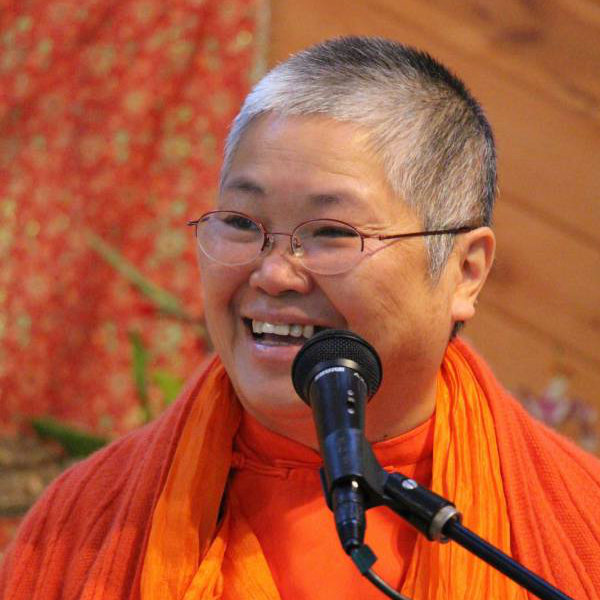
Swami Sitaramananda

Swami Sitaramananda

Yoga Farm Director

Swami Sitaramananda is a senior disciple of Swami Vishnudevananda and acharya of the US West Coast centers and Ashram.  Swamiji is also the acharya of the Sivananda mission in Asia, especially in Vietnam, where she hails from.

View Profile >

Yoga Heals on the Spiritual, Mental and Physical Levels.

Here’s how – Yoga works on all three bodies: the physical body, astral body, and causal body. In this article, we will learn about three bodies and how Yoga heals them.

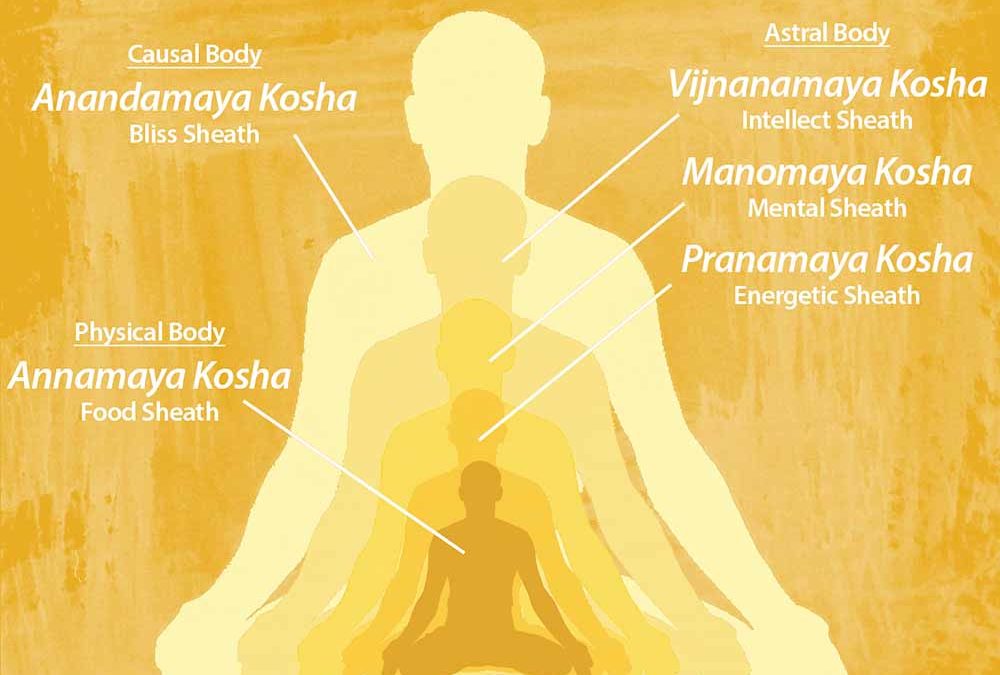
Each person has a physical body made of matter, an astral body containing prana and thoughts, and a causal body which contains the quality of spirit.

The three bodies are made up of the five “koshas” or sheaths. Below is a breakdown of the three bodies and their corresponding koshas:

Physical Body – The Vehicle for the Soul

Annamaya Kosha – The Food Illusion Sheath

  • Made of food
  • Composed of the five elements: earth, water, fire, air, and ether.
Astral Body – A Subtle Body that the Eyes Cannot See

Pranamaya Kosha – The Energy Body

  • Made of prana or vital life force
  • Physical body is able to live and act because of prana

Manomaya Kosha – The Mind

Vijnanamaya Kosha – The Intellect

Causal Body – The Core from Which Your Karma Originates

Anandamaya Kosha – The Bliss Sheath

  • A thin veil of ignorance
  • Subtle identification with separateness
  • Here you experience your true blissful nature

To help you understand, it’s good to know that the sanksrit word “maya” means illusion and “kosha” means sheath. All of the five koshas are illusory sheaths that are veiling the reality of your true nature as Satchitananda—Existence, Knowledge and Bliss Absolute.
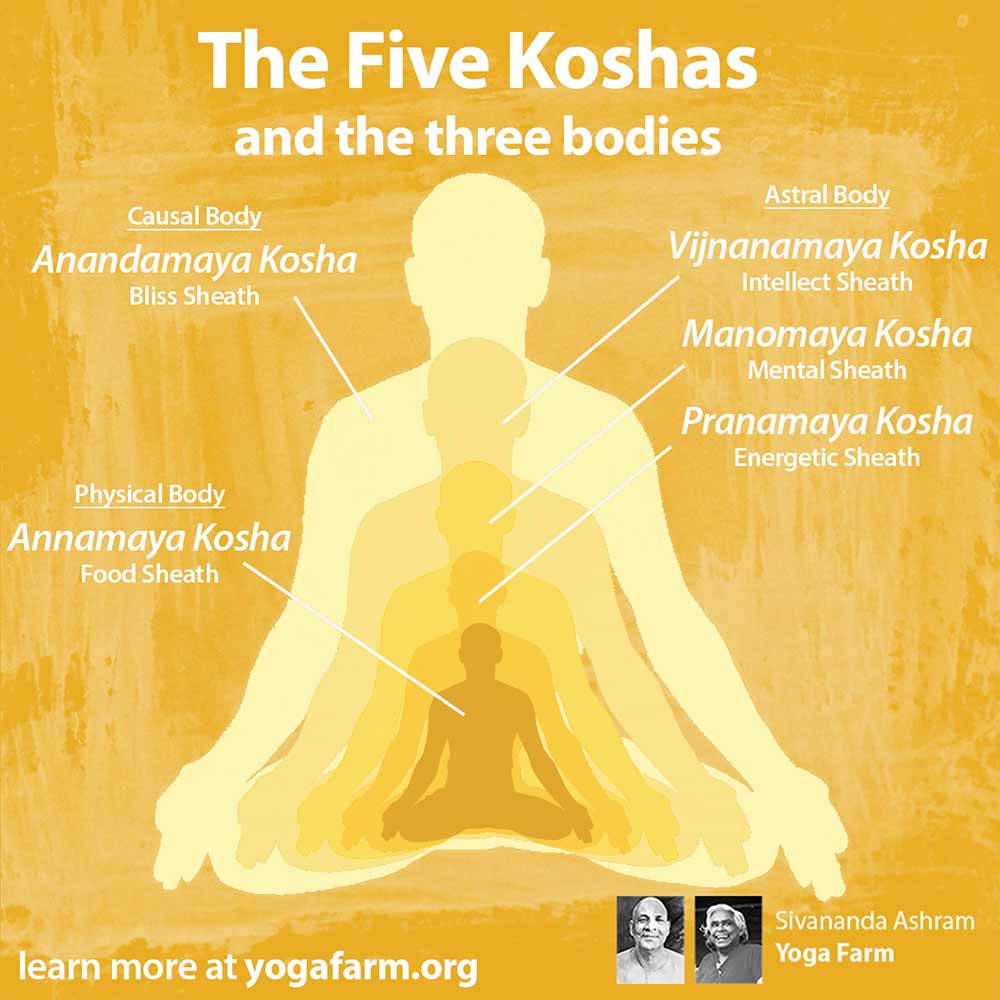
A graphic illustrating the three bodies and the five koshas: Physical Body, Astral Body, Causal Body. Annamaya kosha, Pranamaya kosha, Manomaya kosha, Vijnanamaya kosha, and Anandamaya Kosha.

How to Purify the Three Bodies

Yoga is purification. That is why in Sivananda Yoga we focus primarily on the purification process. The purification process means you have to clean out the gross veils, all these aforementioned maya sheaths (the koshas), in order for you to see through to the Self.

The good news is that there are many different ways to purify. Below are the ways you can purify each kosha. Then you can experience health and peace of mind.

How to Purify the Physical Body

Firstly, you purify the gross physical body and identification with it. This can be accomplished through asanas (yoga postures) and the practice of proper vegetarian diet. If you eat a proper diet then your body will function properly and will not be a hindrance.

Proper Exercise – Asana
  • Removes blockages and toxins in the body
  • Increases strength and flexibility
  • Tones organs, tissues and muscles
  • Reduces stress
  • + many more health benefits
Proper Diet – Vegetarian
  • A proper diet is Sattvic or pure
  • Avoid foods that dull or overstimulate the mind
  • Food prepared with digestive spices
  • Food that is not overcooked or undercooked
  • Avoid drugs and alcohol
  • Organic, whole, unprocessed foods
  • A vegegtarian diet follows the principle of Ahimsa (non-violence)
  • Heals and prevents disease and toxic buildup in the physical body
  • Provides full range of nutrition for optimal function
How to Purify the Astral Body

Secondly, the pranamaya kosha is purified through pranayama, or control of prana. Pranayama involves breathing exercises that help remove blockages and regulate the flow of prana in the pranamaya kosha.

Pranayama – Proper Breathing

Complete Yogic Breath

  • Control of Breath = Control of Prana
  • Use the full lung capacity
  • Inhale and exhale into the diaphragm, ribcage and chest
  • Reduces stress; activates parasympathetic nervous system

Kapalabhati

  • Forceful exhalation, passive inhalation
  • Removes stail air from the lungs
  • Clears blockages in the Nadis or energy system
  • Increases mental clarity, concentration and focus

Anuloma Viloma

  • Alternate Nostril Breathing
  • Balances prana, mind and emotions
  • Increases pranic energy and overall vitality
  • Leads to mental and emotional health

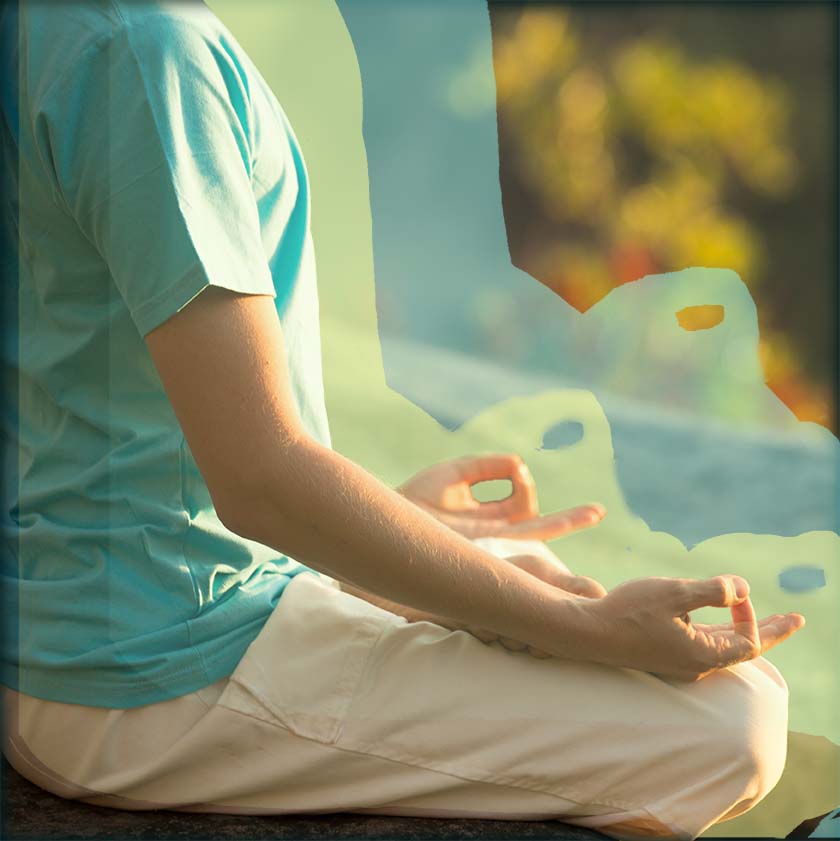
Thirdly, you can purify the Manomaya kosha through meditation, positive thinking, proper behavior, karma yoga (selfless service), bhakti yoga (devotion), yamas and niyamas (yogic ethics). The Manomaya kosha is the mind, emotions and the senses, and in it you also have the subconscious.

Dhyana – Meditation
  • Connects us with a Reality beyond thoughts and emotions
  • Brings inner strength and peace of mind
  • Provides clarity of purpose in life
  • Increases concentration
Positive Thinking
  • Being aware of negative thoughts
  • Replace negative thoughts with positive ones
  • Practice positive affirmations
  • Over time eradicate negative and wrong thinking
Yamas and Niyamas
  • Ethical foundation of Yoga
  • Yamas include: Non-violence, truthfulness, non-stealing, chastity, and non-greed
  • Niyamas include: purity, contentment, austerity, scripture study, and surrender of the ego
  • Purifies the mind and the heart, removes selfishness

A plate of delicious, organic, vegetarian food at the Sivananda Yoga Farm.
Bhakti Yoga
  • Sublimates the emotions to devotion
  • Opens the heart
  • Surrender to God
Karma Yoga
  • “Do your best, surrender the rest”
  • Let go of attachments to results of action
  • Purifies the heart and the ego
  • Overcome likes and dislikes
  • Gain a flexible mind

    Fourthly, in order to purify the Vijnanamaya kosha, you have to purify the intellect and ego. In order to purify the ego you need get the selfishness out of the way through selfless service or Karma Yoga.  Morever, you can purify the intellect through self inquiry, jnana yoga techniques, and meditation.

    Jnana Yoga
    • The Study of Vedanta (Yoga Philosophy)
    • Highest level of knowledge
    • Knowledge passed down by Rishis or enlightened sages
    • Teaches unity of life
    • Proclaims the common Self in All
    • The limited ego or “little s” self makes you feel separate
    • Your true nature, or “Big S” Self is one with everything
    Self Inquiry
    • Self inquiry is a Jnana Yoga technique
    • Always inquire: “Who am I?”
    • Assert the you are Brahman, the imperishable supreme soul
    • Brahman is one with everything
    • Brahman is Sat (existence) Chit (knowledge) Ananada (bliss) absolute
    • Happiness is your true nature

    In order to practice Jnana Yoga and self inquiry, you must always ask “Who Am I?”. In addition you negate any attachment to the limited, illusory world or false sense of self. Meditation will show you that the intellect is also limited.
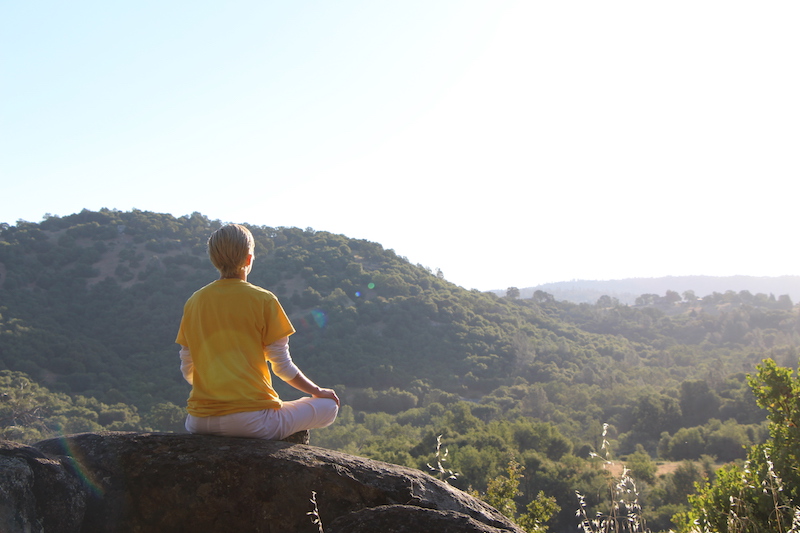
    Eventually with practice you will know the intellect is limited because you have the experience of the absolute, infinite, primordial Self. This experience is known as Samadhi. 

    Finally, through Samadhi you transcend the Anandamaya kosha. Meditation already leads you to anandamaya kosha, but your view of the Self is still being obstructed by a thin veil of spiritual ignorance.

    The thin veil of spiritual ignorance is burned when you experience Samadhi, or complete absorption of the mind. Only at that time do you know that the reality is more than the anandamaya kosha, and you go beyond that kosha and merge with the Supreme.

    Conclusively, the four paths of yoga lead to the unveiling of the five koshas and heal on a spiritual, mental and physical level. The four paths of Yoga are karma yoga, bhakti yoga, raja yoga (which includes Hatha Yoga) and jnana yoga.

    In other words, practicing the five points and the four paths of yoga will lead the three bodies to be healed. When you remove spiritual ignorance,  you come closer your True Nature. That is to say you experience spiritual, mental and physical health.

    Self-Realization

    The classical Yoga teaching is always about Self-realization, with nothing else but that realization as the end goal. However, spiritual ignorance makes us believe ourselves to be something other than Self, which is when we are identifying with the vrittis (thought waves).

    Alternately, we identify with our thinking in the mind and then the thinking becomes solidified and it manifests as karma. After that, the soul is born in the physical body in order to work through solidified karmic tendencies that come from the spiritual ignorance in the first place.  

    For the healing aspect of yoga, we have to go into the deep root cause of the wrong thinking in the first place. Because of this, Yoga primarily focuses on spiritual progress. In order for spiritual progress to take place, there must be removal of the impurities in all three bodies. 

    © Swami Sitaramananda 2018 – No part of this article may be reproduced in any form without the written permission of the author.

    Yoga Teacher Training Course

    Check out our 200-hour Yoga Alliance certified Yoga Teacher Training Courses offered twice a year in California, 3x in Vietnam, once in China and once in Japan.

    Foundational Courses

    Choose from upcoming courses for beginners and intermediate level students.

    Yoga Vacation

    Rejuvinate your body and mind. Experience and progress with daily Yoga classes. Learn the 12 basic asanas and pranayama. Enjoy daily meditation, chanting, and organic vegetarian meals.

    Rejuvenate Your Being

    A Yoga vacation is an ideal getaway to change perspective towards one’s life and become healthier, more relaxed and connected.

    Overcoming Chronic Pain

    Overcoming Chronic Pain

    Overcoming Chronic Pain

    by Swamisankariananda

    Swami Sivasankariananda

    Swami Sivasankariananda

    SF Sivananda Center Director

    Swamiji took sannyas in 2017 and is a certified yoga therapist. She co-teaches Sivananda Yoga Teacher Training Courses and Sivananda Yoga Health Education Trainings and focuses on teaching Chronic pain management.

    Pain is the main reason people go to the doctor. Unfortunately, 20% of American adults suffer from moderate to severe chronic pain , as do 13% of North American teens and 10 to 30% of the adult population of Europe.

    Its effects are physical, psychological and spiritual. Acute pain is typically a pain with a specific, identifiable cause, and a pain like twisting your ankle that resolves relatively quickly. Additionally, pain becomes chronic when it lasts three to six months.

    Chronic pain can stem from an acute injury or surgery, but doesn’t always. The most expensive pain conditions in America are headache, arthritis and back pain. Furthermore, it can affect daily activities such as work, relationships, and sleep.

    When pain is persistent, it can lead to mood disorders, depression, even suicide. Recent research suggests that pain can affect the chemistry of the brain and the functioning of the nervous systems.

    Other people, including many doctors, may find it hard to believe the severity of persistent pain. (The choice of the word “persistent” is intentional, as “chronic” does not sound hopeful!)

    Pain is subjective

    How can we really know how much pain someone is in? It is very difficult to describe or measure. “On a scale of 1 to 10, how bad is your pain?” How can we know whether one person’s 8 out of 10 is the same as another’s 8 out of 10?

    It is the same conundrum as trying to explain color to a blind person, or trying to describe the taste of jackfruit to someone who has never tasted it. We can try using adjectives like “aching,” “burning,” “sharp,” “shooting,” “radiating,” but these are also imprecise.

    Our capacity to communicate about pain is equal to the challenge of describing what love feels like, and how deeply impacting it is.

    Protective Response

    The human body comes equipped with many protective mechanisms—among them are sneezing, muscle spasms, the fight/flight response… and pain.

    Pain is a normal human experience, ensuring our survival. Its job is not only to alert us to danger, but make us stop what we’re doing, move away from the danger and sometimes even go lie down. Imagine the members of the Marsili family in Italy; because of a rare genetic mutation, they feel little or no pain.

    That might sound good at first, but consider the potentially dangerous consequences. You could burn yourself or break a bone without knowing it. You could then keep moving and make matters worse.

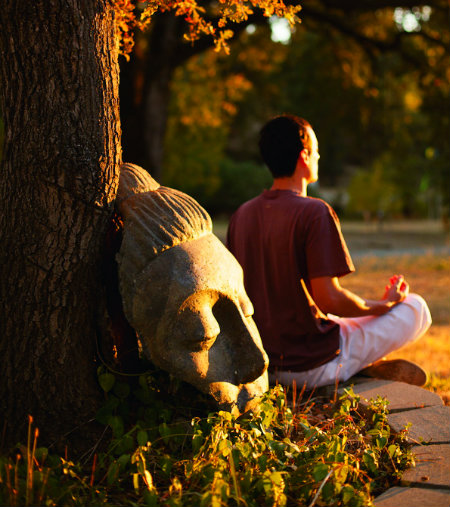
    Man meditating near a tree with large stone face of buddha.  Fall leaves on the tree and nature in the surroundings

    What is Pain?

    Recent advances in pain science focus on the nervous system and the brain. The central nervous system consists of the brain and spinal cord. The peripheral nervous system consists mainly of nerves. When something potentially harmful happens, a message is sent to the brain via nerves and the spinal cord.

    Note that the impulse sent is not a pain message, but a danger message. (Neurons cannot tell the difference; they just relay a signal.)

    Three things excite the neurons in your pain-danger system: mechanical forces on your tissues, chemical irritations and extremes of hot and cold. The greater the perceived threat, the more neurons jump into action, the more insistent the message.

    It is not until the information from the senses reaches the brain, though, that a decision is made about how dangerous it is and whether something needs to be done.

    But the pain we feel is not an accurate indication of tissue damage or health. A major injury might not hurt much and a small paper cut can hurt a lot. The brain also deals with information presented on a priority basis. And that is a decision between it and you.

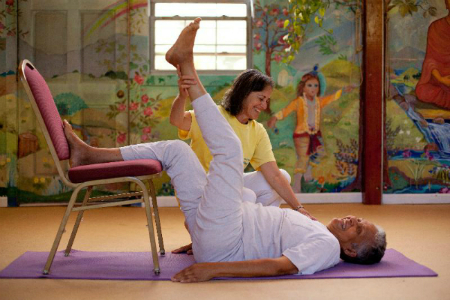
    Woman is laying on a yoga mat on her back with one leg resting on the seat of a chair, and a teacher is helping to hold her other leg in the air for a gentle stretch.

    Nervous System: Experience, Not Facts

    Nerves are made up of thousands of nerve cells, or neurons. They sense information and send messages via electrical impulse. If the message is loud enough and travels the length of the neuron, the neuron releases chemicals to excite the next neuron.

    The chain reaction reaches the spinal cord. If an immediate response is needed, a reflex can be initiated from there. Otherwise, signals may be amplified and sent along to the brain. The brain provide us with experiences, not facts.

    The signals lead to brain activity that creates pain. Action impulses from the brain can then influence any system of the body. Usually long before tissue heals, the brain itself reduces the danger signals and its own response, allowing pain to subside so “normal life” can resume.

    Pain is Complex

    There are 45 miles (72km) of nerves in the body, all collecting information about what is happening inside and outside the body. In the brain alone, there are 100 billion nerve cells. That’s 1,000 trillion connections passing information around the brain.

    Pain Can Persist after Tissue Heals

    There are cases where, after three to six months, the tissue may have healed, but the pain remains. Many systems have gone on red alert, usually including the emotional systems. Fear and worry feed right back into pain, revving it up. It is harder to pay attention.

    Less endorphins, and other feel-good chemicals, are being produced by the brain when there is pain. It becomes harder to feel anything but pain in the body, harder to plan refined movements. Pain can lead the person experiencing it into a spiral—into a lonely, desperate, even life-threatening position.

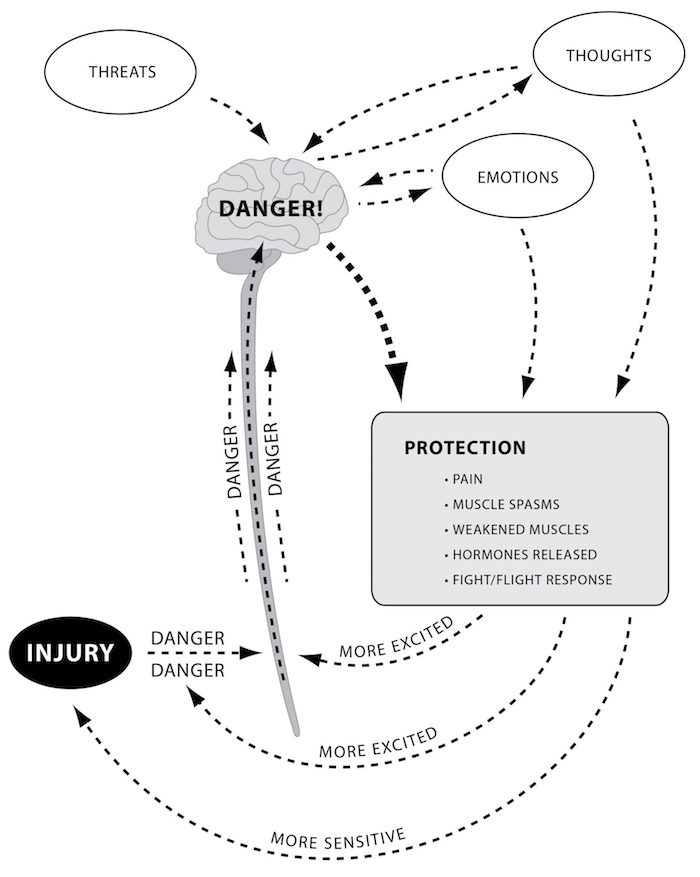
    Illustration showing the brain and brain stem in the center, with threats, thoughts, and emotions coming at the brain.  Injury is shown at the bottom sending danger signals to the brain.

    Revving up the fight/flight response. Courtesy of Neil Pearson

    The Nervous System Gets Wound Up

    Persisting pain is related to two things: 1) changes in the physical body; and 2) neuroplastic changes in the nervous systems. Pain can get worse because the nervous systems decide to pay closer attention to the danger signals. Excited neurons send even more signals, exciting neighboring neurons.

    The threshold of the neuron sensors are lowered. With this much activity, the neurons function as if there is considerable danger and begin to produce inflammation to protect the body. The nervous system is wound up. The neural pathways related to pain expand.

    Similar changes of wind-up happen in the brain, and it can seem that positive feedback loops build allowing the changes to create a story of considerable danger, which then loops back to create more pain and more sense of danger. Research shows that understanding this process can help reduce pain.

    [“Suffering equals pain multiplied by resistance.” —Shinzen Young]
    Pain takes over other functions

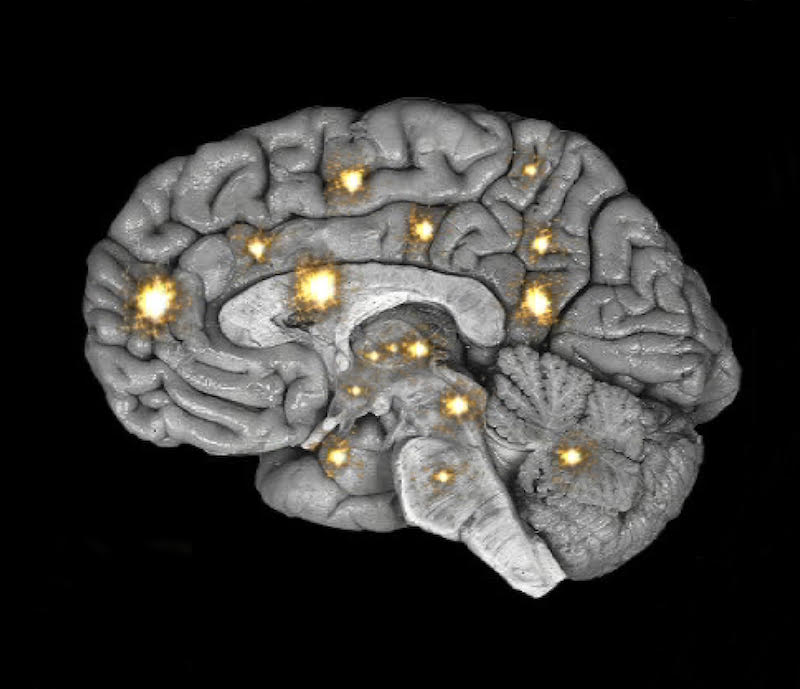
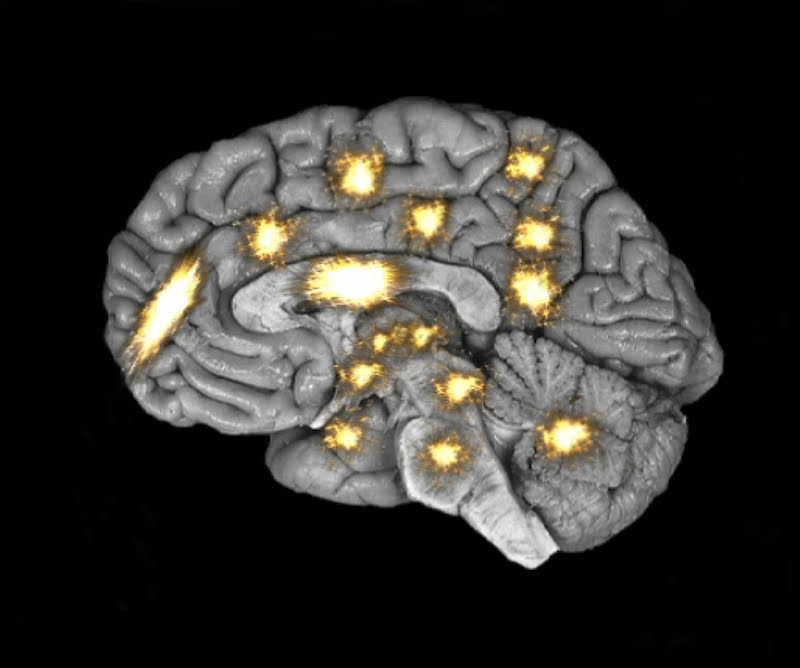
    When pain is experienced, 200 to 400 parts of the brain can get excited. The pain alarm system becomes hypersensitive. Normal functions of the brain in those areas are altered—some more active and some less. The pain can seem to spread as the signal expands into adjacent areas of the brain.

    Day-to-day activities such as thinking, planning and regulating emotions can be impacted. While pain might normally be processed in 5% of the nerve cells in a particular area of the thinking brain, in persistent pain, it can expand to 15–25% of the cells. The brain learns pain.

    Picture of the human brain with highlighted areas when pain is has been initiated

    Many areas of the brain can light up when there is pain.

    Picture of the human brain with highlighted areas when pain is chronic

    If the pain becomes chronic, more of the brain is processing it and the lit area grows.

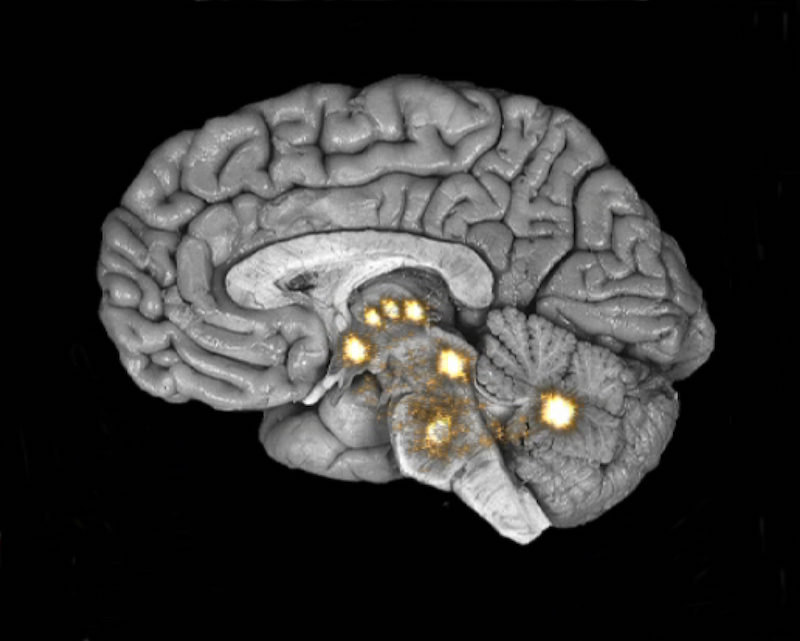
    Picture of the human brain with highlighted areas when pain signals subside

    When the signals subside, no more pain.

    Courtesy of Michael Moskowitz, M.D. and Marla Golden, D.O. and the neuroplastix.com website

    The Body Map/Subjective Memory

    The brain relies on being able to feel the body. It “sees” the body differently than we see ourselves. Given the large number of nerve endings in the skin, the brain receives more detailed information about the skin than what’s inside it. The more information, the bigger that body part becomes in our internal “body map.”

    Pain distorts how the brain perceives the body (as do memories, anxiety, preconceived ideas, etc.). A person with hand pain, may literally experience the hand being larger than normal.

    We may experience joint stiffness or pain; in actuality, the problem is in the nervous systems, not only in the body. The brain is sending the wrong signals. More things trigger the pain, even the slightest stress.

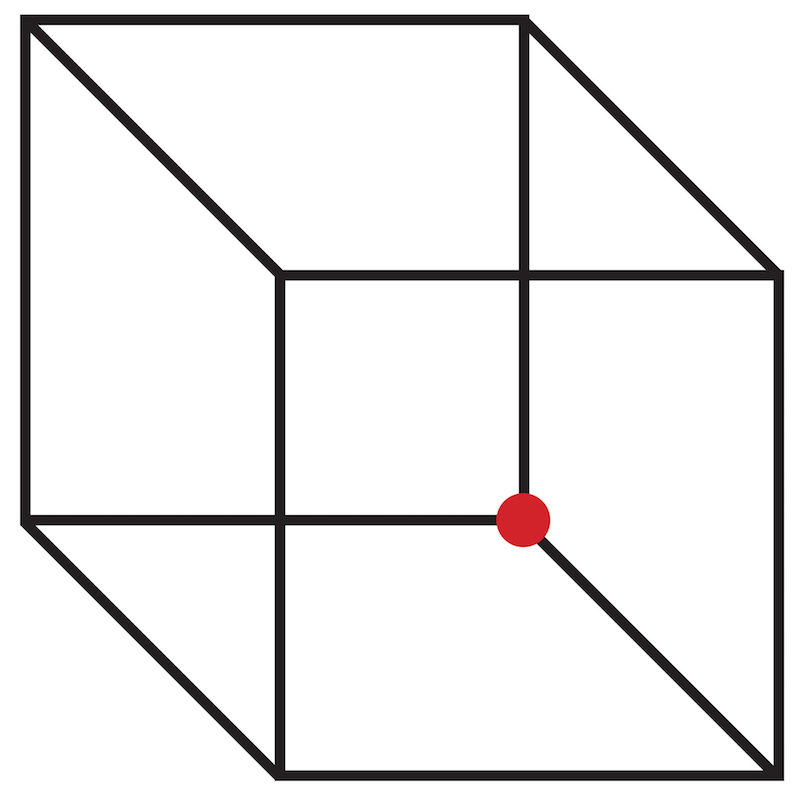
    Illustration of see through box with red dot showing perspective

    You Can Change Pain

    Is the red dot inside or outside the cube? If you can change how you see this cube, that means you can change how you perceive visual inputs to your brain. And if you can do that, do you think you can change how your brain perceives danger signals?

    If we are too quick to run from pain, or medicate it, we miss what it is trying to tell us. If we allow the battle to be between the doctor and the disease and think the solution is outside ourselves, we never get a chance to find the inner resources to face the situation, or find our own solutions to the problem. When we work together with Nature, different outcomes are possible.

    What is Neuroplasticity?

    The good news is that the nervous system is adaptable and constantly changing. Nerve cells in the brain change connections and behavior when new information is presented. One function of the brain can be transferred to an adjacent area of the brain if needed.

    If someone is blind, the areas of the brain that process visual information are free to process information from other senses. Thus there can be heightened awareness in other senses. If we don’t exercise a brain function, our potential in that area decreases. Equally, we get better at whatever we practice.

    • Education in pain neuroscience can help put the ball in our court. The nerves will learn whatever we practice. Thanks to neuroplasticity, we have the power to influence how the nervous system functions.  It is not necessarily easy or quick, but it is feasible. 

    • Neurons can be changed by almost anything—how we move, by input through our skin, how we stretch, what we think, what we see, our environment, what we believe, our emotions, etc. We have the ability to change each of these things, so we have considerable power to change how our neurons work

    • Sensors at the end of nerves are replaced every few days. We have some influence on the sensitivity of the new sensors. Given that there are trillions of sensors in your body, and thousands are replaced every second.

    “More time in a calmer state, more opportunity for positive change.” —Neil Pearson

    Every second your nervous system is in a state of more calmness, your body has the opportunity to replace the highly sensitive ones with the more normal (low sensitivity, high threshold) sensors.

    •  Brain chemistry changes when we practice finding ways to be happier. The fight/flight response causes the release of cortisol, which leads to more pain. Endorphins are produced when we are more content. Older adults with arthritis who are in good marriages experience less pain than those who are single or in unsupportive relationships.

    • According to Neil Pearson, “One endorphin molecule may be able to block as many as 50 danger signals.” This makes endorphins even more powerful than morphine—but with pleasant side effects.
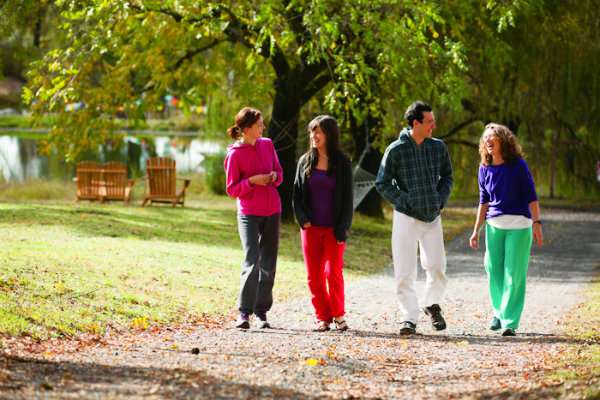
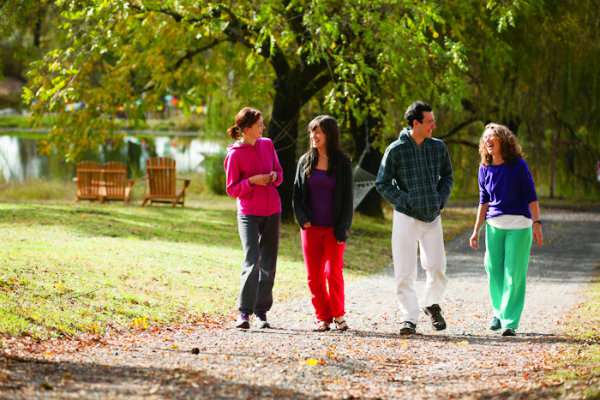
    Four people walking on a path talking and laughing, a pond, trees, grass and lawn chairs are in the background

    Keep Moving

    Movement is an essential approach for successful pain care. The hypersensitive nervous systems are wary of movement, though. We move tentatively and an internal warning alarm comes on—even before there is any real danger— so we stop.

    However, to work towards regaining ease of movement, we must first be calm and attentive, then move up to and just beyond the edge of the pain. As the alarm goes off, ask, “Is it really dangerous? Will I regret it? Maybe this is just a normal situation.”

    By challenging the alarm, we turn it down. Muscles need to be taught that it’s okay to move and stretch. We must reconnect with body sensations, paying more attention to them than to the pain.

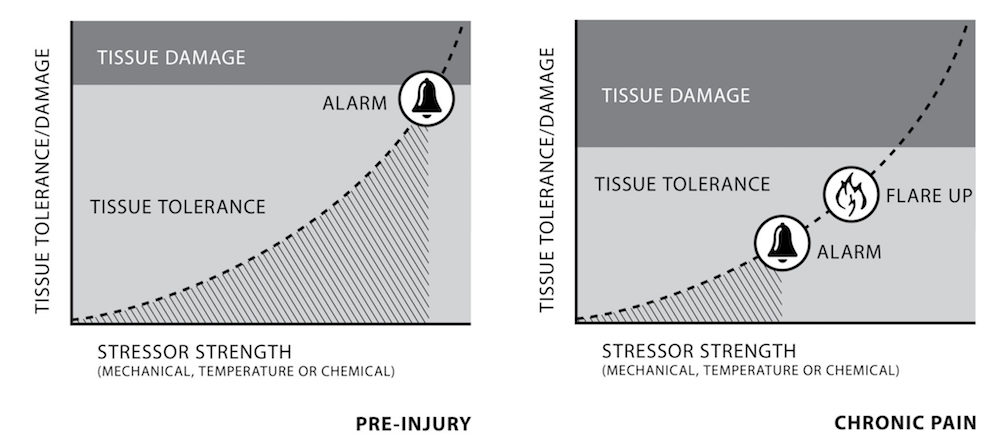
    2 Diagrams side by side showing tissue damage, tissue tolerance and when an alarm will go off depending on when it is pre-injury vs with chronic pain

    The body will protect you from tissue damage. Once there is chronic pain, the warning alarm comes on prematurely. We believe there is danger sooner, so we give in to the alarm. Mobility decreases. 

    Courtesy of Neil Pearson

    How Yoga Helps

    Pain can be changed. And so can suffering associated with pain. Pain does not have to equal suffering. All is changing. Pain will change. In Yoga we learn to observe, accept what is and do our duty, putting aside personal preference. The experience is not about pain, it is what is behind the pain that brings insight into deeper truths. We go beyond our limited idea of self and expand.

    Used as a therapeutic treatment, yoga helps relieve pain and muscular tension, fostering greater ease of movement and building self-reliance. Physical, mental and spiritual self-awareness and self-regulation improve. Feelings of anxiety, fear and isolation are reduced and a better quality of life can be found. It is accessible, less costly than medical intervention and has long-lasting effects—setting us on the journey to connect with the holistic Self, highest Self, the Perfect Self.

    The five points of Yoga are the best medicine:

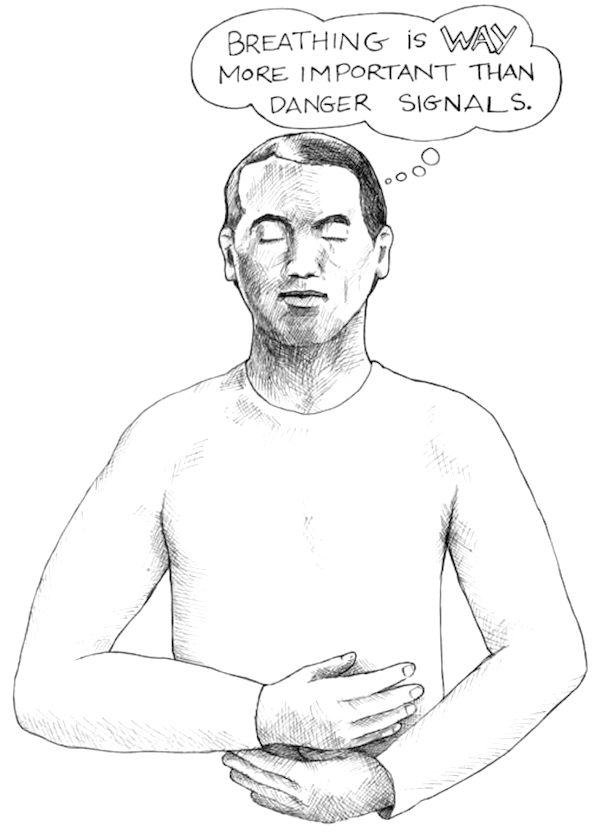
    • Proper Breathing – Conscious breathing winds down the nervous system. An effective way to trigger parasympathetic response and release endorphins before moving is the following simple exercise. Just practicing this three to five times a day can help regulate the nervous system.

    Drawing of a man, eyes closed, hands gently placed over abdomen with a thought bubble "Breathing is WAY more important than danger signal."

    Longer, Smoother, Softer Breathing Practice

    In any comfortable position, focus on your breathing. It doesn’t have to be any particular way, just watch it for a minute or so. Next, see if you can make it a little longer. Observe for another minute. Then, see if you can make it a little smoother. Observe. Finally, can you make it a little softer?

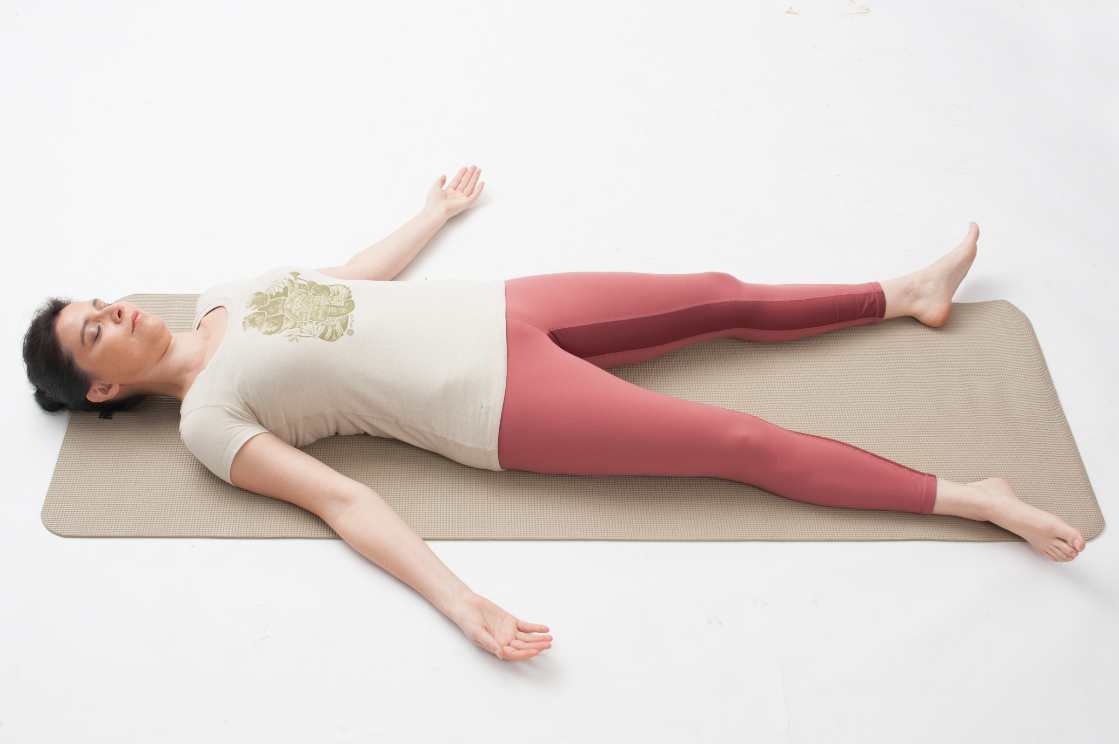
    Student laying in Savasana - corpse pose, on her back, arms resting gently at 45 degree angle, palms up, and legs resting comfortably apart

    Savasana is an optimal position for body awareness practice.

    • Proper Relaxation – It is difficult not to focus on pain when it is severe. It is also challenging to relax. Practice a body scan in savasana (or sitting, if it’s more comfortable) to build body awareness. 

    Body Awareness Practice

    Starting with the feet and toes, pay attention to any subtle, non-pain sensations. Take your time and go through the entire body. This can prepare you to move calmly into an adapted yoga sequence with ease and confidence.

    • Proper Exercise – Mild to moderate exercise can decrease physical pain. Monitor muscular tension. Take note of how the breath feels, how the mind feels, how the spirit feels. Stay calm. Do not ignore pain. Be sure you feel safe. The yoga sequence should be gentle and at a slow pace.

    Slow, Gentle and Conscious Asana Practice

    Pause to take a slow, deep breath between rounds of sun salutations. When practicing bhujangasana, for instance, inhale up and exhale down a few times with no long-holding.

    Continue to monitor the body/mind/breath. Stop any time you cannot maintain the state of calm. Progress slowly.

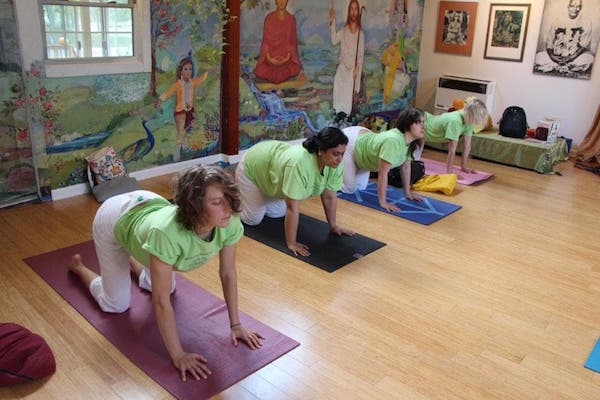
    Students in a classroom, performing cow stretch on a yoga mat, on hands and knees, arching their backs, lifting their heads up
    Meal place setting of bowl of soup, bowl of salad, and plate of potatoes, roast vegetables, grains, herbs and bread.

    • Proper Diet – The yogic (vegetarian) diet can help reduce pain and inflammation, and can even help reduce side effects of medications.

    Anti-Inflammatory Diet

    Eat lots of vegetables, beans, fruits and a variety of whole grains. Include nourishing fats and high-quality protein.

    Use ginger and turmeric. Restrict dairy and grains. Reduce flour and sugar intake. Avoid nightshade vegetables—potatoes, tomatoes, peppers and eggplant and processed food.

    • Positive Thinking and Meditation – Thought, like proper movement, is among the most effective ways to stimulate neurons in the brain circuits. The mind drives pain. The mind can also reverse it. Imagine an area of the brain devoted to pain is shrinking. Reframe stressful events as beneficial.

    “Pain” can be rephrased as “sensation.” Cultivate less fear responses. In working with the mind, we gain the ability to focus for longer periods. We can manage stress. Positive thinking produces endorphins. We build self-awareness, quiet the mind and senses. In a 2011 study using functional MRI results, four hours of meditation training was shown to significantly reduce pain intensity.

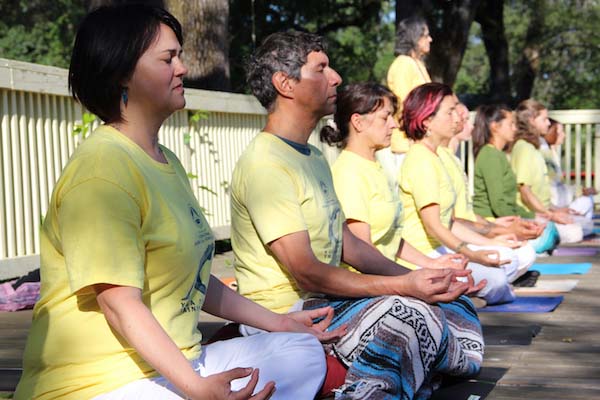
    Students practicing meditation sitting on a deck outdoors, trees in the background
    graphic of a woman sitting with her legs crossed and hands in prayer position over her head in a yoga pose

    Yoga is Medicine

    Highly effective self-care, Yoga requires the utmost patience and perseverance. By its steady practice, we can not only change pain, but empower people to live with joy and meaning. We seek to cultivate the same awareness in meditation practice, leading to the non-dual state where there is only peace; pain disappears.

    —Swami Sivasankariananda

    With gratitude to Neil Pearson, a Canadian physiotherapist, professor and yoga therapist, who is extremely generous with his significant wisdom regarding the latest advances in understanding pain.

    This article was reproduced and edited from Sivananda Yoga Life magazine, spring/summer 2018 issue. No part of this article may be reproduced in any form without the written permission of the author. 

    Yoga Teacher Training Course

    Check out our 200-hour Yoga Alliance certified Yoga Teacher Training Courses offered twice a year in California, 3x in Vietnam, once in China and once in Japan.

    Foundational Courses

    Choose from upcoming courses for beginners and intermediate level students.

    Yoga Vacation

    Rejuvinate your body and mind. Experience and progress with daily Yoga classes. Learn the 12 basic asanas and pranayama. Enjoy daily meditation, chanting, and organic vegetarian meals.

    Rejuvenate Your Being

    A Yoga vacation is an ideal getaway to change perspective towards one’s life and become healthier, more relaxed and connected.

    Ayurveda and Jyotish for Holistic Health

    Ayurveda and Jyotish for Holistic Health

    Ayurveda and Jyotish

    for Holistic Health

    by Swami Sitaramananda

    Swami Sitaramananda

    Swami Sitaramananda

    Yoga Farm Director

    Swami Sitaramananda is a senior disciple of Swami Vishnudevananda and acharya of the US West Coast centers and Ashram.  Swamiji is also the acharya of the Sivananda mission in Asia, especially in Vietnam, where she hails from.

    View Profile >

    What is holistic health? Holistic healing implies healing the root cause of a problem, rather than simply treating or masking a symptom. Furthermore, it calls for healing the whole person. That means not only the physical body, but also the mind and connection with spirit.

    In this article, you will learn more about Ayurveda and Jyotish ( Vedic Astrology ) as they relate to Yoga and health. To give some clarification, this article is not meant to explain the basics of Ayurveda or Jyotish, but to provide context to their proper use in conjunction with Yoga. 

    Ayurveda and Holistic Health

    It helps to understand that Yoga and Ayurveda are both Vedic sciences. Put another way, they both originate from ancient scripture known as the Vedas. They have the same kind of premise. According to both sciences, the material universe is composed of the five elements.

    The Elements and Doshas

    Ayurveda is based on the theory of the five elements:

    • Earth
    • Water
    • Fire
    • Air
    • Ether 

    From the five elements, the three doshas and their qualities are composed. 

    • Vata – Air and Ether
      • Pitta – Fire and Water
        • Kapha – Earth and Water

        There is obviously lot more to it. The main thing to understand for this case is that Doshas are easily imbalanced through improper diet and lifestyle. In this way they are the faults, imperfections, the three distortions, commonly referred to as your constitution. 

        Graphic on the Elements and qualities of a person who is Vata
        Graphic on the Elements and qualities of a person who is Pitta
        Graphic on the Elements and qualities of a person who is Kapha

        Balancing the Doshas

        You will be healthy if you live according to your constitutional dosha that you were born into by balancing the qualities and elements with their opposites. How you currently eat, act and change your thoughts affect how you develop your Vikruti, or your changing constitution.  

        So by using these two factors, the original constitution (Dosha), and your present constitution (Vikruti), you change how to regulate your thoughts and actions to bring it back to a balanced state. Therefore, through this regulation you bring about a certain state of health.

        Ayurveda is very much a practice of herbs and nutrition that are important and cleansing to the body and mental process. Ayurvedic practitioners use herbs and diet to bring you back to that state of health and calm.

        Ayurvedic and Yogic Diets

        The whole ayurvedic is a complex science. You need to learn more about your constitution to be able balance it effectively. There are certain diets and lifestyle changes prescribed for each dosha.

        For instance, when you see a person that is completely red from top to bottom, you say something is wrong with your pitta dosha. You have to say that and you have to somehow not aggravate them and calm them down.  

        If an Ayurvedic practitioner prescribes a Yogi to eat meat, the Yogi says no. That is because a Yogi follows the spiritual ethic of Ahimsa – non-violence. In this manner, a practitioner of Yoga may choose to follow an ayurvedic diet or lifestyle to the extent that it fits in with Yoga life.

        The ayurvedic diet is simple, you have to learn the basics and add it on to the yogic diet. A yogic diet is a sattvic diet. Sattva, or purity, brings a calm, contented and aware state of mind that will allow one to bring about the capacity to review the Self.

        Groups of people at 2 picnic tables laughing and enjoying an organic ayurvedic lunch

        Eating a balanced, wholesome diet is part of the yogic and ayurvedic lifestyle.

        The 3 Causes of Disease

        In addition to the doshas, there are three causes of disease in Ayurveda. The first cuase is misuse of the intellect, Also known as “crimes against wisdom,” it includes any careless action that goes against health and well-being. Examples include eating the wrong food or overexerting the body.

        The second cause is the misuse of the senses. It involves overstimulation or deprivation of the five senses, which leads to imbalances in the body and mind. For instance, excessive bright lights and loud noises can upset the nervous system, and if prolonged can lead to disease.

        The third cause is seasonal variations. In order for optimal health, it is important to follow the rhythms of nature. This involves waking up at the right time, experiencing suitable temperatures in each season, or adapting lifestyle to fit one’s age. 

        Finally, both Ayurveda and Yoga profess that forgetting your true nature as spirit is the chief underlying cause of all disease. You were born into your body because of this fundamental ignorance of the Self.

        When you attain Self-realization, there is no more disease. That’s because there is no more false identification or attachment with the body, mind or senses.

        Student smiling while laying on a blanket on the grass

        Ayurveda offers diet, lifestyle and herbal medicine for a happy, healthy life.

        Ayurveda Supports Yoga

        According to Ayurveda and Yoga, spiritual ignorance is a root cause of all disease. When you forget that you are a divine being Who is already whole, pefect and complete, the mind begins to reach out to external things for satisfaction.

        Often times these external things are not conducive to our health, such as ice cream or excess television. Excessive desires and sensual indulgences speed up the mind and bring unrest. Consequently, a fast mind will never have peace and will experience mental and physiological stress.

        Furthermore, the more your mind is rajasic and tamasic the more you churn. Eventually it will cause you to get old and die early. In contrast, you will experience health when you are detached, calm, quiet and dwelling on yourself.

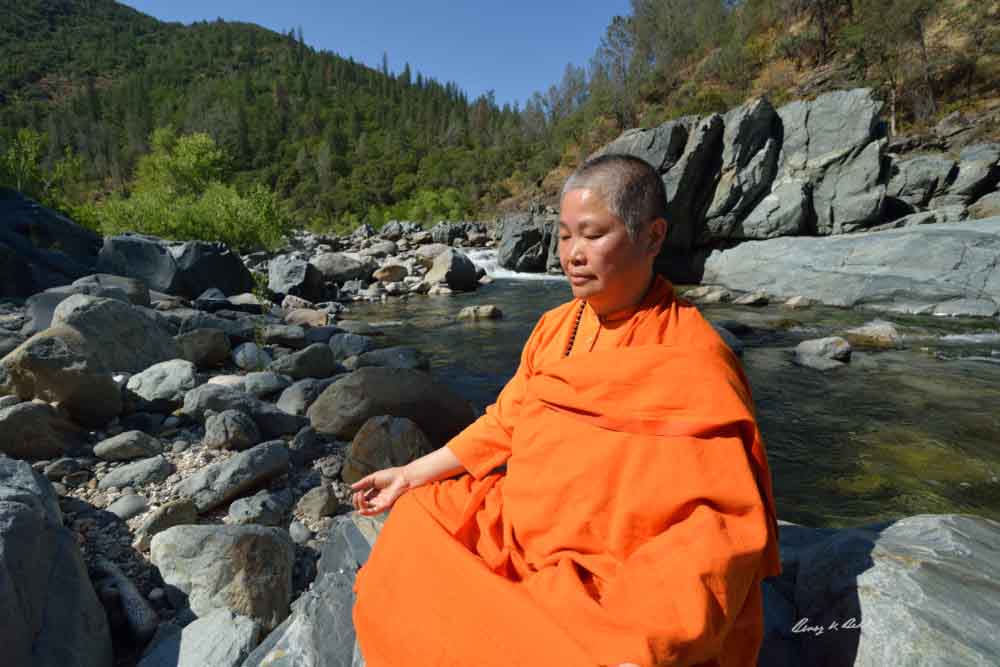
        Swami Sitaramananda meditating on rocks beside flowing river through tree covered mountains

        Yoga meditation and Yoga asanas (poses) are both integral aspects of Ayurvedic medicine.

        Likewise, the more you are peaceful, knowing yourself, not getting too upset or uptight about things, the more you slow down the process of disease. Classical Yoga, in conjunction with Ayurveda, would prescribe only sattvic techniques in order to slow down disease.

        Yoga seeks to calm down rajas and eradicate tamas. In tamas, the mind is veiled and we fail to see the true Self. On the other hand, rajas makes the mind restless and desirous, constantly projecting outwards and creating distortions.

        The main aim in Ayurveda is physical and mental health, while Yoga is for healing of the spirit. Healing of the spirit means recovering your true self. Only when you nurture sattva, by purificatory practices, we can heal our spirit, and see clearly ourselves as immortal spirit. 

        Healing the body alone is not the primary goal of yoga; the primary goal is Self-Realization. According to Yoga, the body is only a vehicle or instrument. Ayurveda is a sister science of Yoga that helps with healing the body, which prepares the instrument for its highest duty towards Self-Realization.

        4 cups of assorted herbs and spices

        Jyotish for Holistic Healing

        For many spiritual aspirants, Jyotish is completely new, however it is another Vedic science that is thousands of years old. Jyotish, the vedic science of astrology, was and still is even more so on the margins than Ayurveda.

        The Sivananda Yoga Farm has become one of the institutions that teaches Vedic Astrology in North America.

        Jyotish and Ayurveda

        What does Jyotish have to do with Yoga and healing? As is the same in Ayurveda, in Jyotish you have the three constitutions: Vata, Pitta and Kapha. Vata is ruled by the planets Saturn, Moon and Rahu. Pitta is ruled by the Sun, Mars and Ketu. Kapha is ruled by Jupiter and Venus.


        Vedic Astrologer looking at a birth chart and looking up at diagram of constellations and planets - Jyotish

        Vedic Astrology is the study of planets in our solar system and their effects on the individual.

        Jyotish and Karma

        In yogic terms you have to work out your karma to be healthy. When you are born you have the karma with the physical body, and through the process of working that karma out, you come back to that original reason why you were born.

        Furthermore the planets can show your constitution, they show your karma with your own body, your health, what you gain or lose in life, and your destiny. They rule over your relationships with your family, your partner, your enemies, your community, and your profession. 

        Similarly, the planets determine your education, your psyche, and your contribution to this world. They show your communication with your heart, your relationship with your religion, your guru, or your teachers. Likewise, they rule over your virtues and vices, the ways in which you either remove the ego or make it bigger.  

        Jyotish for the Spiritual Path

        The planets cause all situations and conditions in life. In this way, Jyotish helps the spiritual aspirant to learn their strengths and weaknesses, the tendencies and faults of the mind.

        After you learn about Jyotish, you can use the knowledge and adapt it to your Yoga practice. You learn to balance out any negative qualities or situations through yogic sadhana. You can learn how to compensate for certain health conditions and life circumstances.

        Tree lined landscape with beautiful view of a starry sky

        Jyotish or Vedic Astrology can be a useful tool on the spiritual path towards unity.

        Yoga is Primary

        The 12 yoga asanas (postures), pranayama, meditation, sattvic diet and yogic lifestyle already work on balancing the Ayurvedic doshas. Even if you don’t know what planets are in your vedic astrology birth chart, it doesn’t matter.

        That’s because if you practice the five points and the four paths of Yoga, it balances all the effects of the planets anyway. Your Karma will be alleviated by itself!

        With that being said, it’s not completely necessary to be an expert in ayurveda or jyotish. Just keep practicing Yoga and it will help others and yourself. If you want to have more tools than you can learn a little bit more about the vedic sciences of ayurveda and jyotish.

        Then you will have a little bit more language, which will help you navigate the complimentary vedic sciences. But the primary thing is to continue with your sadhana. For the path of spiritual healing, Yoga is primary.

        Women sitting on an outdoor deck meditating

        The ultimate goal of Yoga is Self-realization.

        There is no doubt that spreading peace and Yoga is the main mission of the Sivananda organization, and that Jyotish and Ayurveda, together, are means to help with that mission.

        Yoga is the primary thing, due to the fact that it leads to liberation and the understanding of the Self. Also it provides all the methods to remove the veils of illusion.

        Furthermore, Yoga offers health and healing; healing of the spirit, mind and body. Likewise, Yoga helps people go through life with more resilience to stress and adversity.

        © Swami Sitaramananda 2018 – No part of this article may be reproduced in any form without the written permission of the author.

        Yoga Teacher Training Course

        Check out our 200-hour Yoga Alliance certified Yoga Teacher Training Courses offered twice a year in California, 3x in Vietnam, once in China and once in Japan.

        Foundational Courses

        Choose from upcoming courses for beginners and intermediate level students.

        Yoga Vacation

        Rejuvinate your body and mind. Experience and progress with daily Yoga classes. Learn the 12 basic asanas and pranayama. Enjoy daily meditation, chanting, and organic vegetarian meals.

        Rejuvenate Your Being

        A Yoga vacation is an ideal getaway to change perspective towards one’s life and become healthier, more relaxed and connected.

        Give the Gift of Yoga this Holiday Season

        Give the Gift of Yoga this Holiday Season

        Give the Gift of Yoga

        this Holiday Season

        This Holiday Season, offer the perfect gift of peace to you loved ones. A Yoga Retreat is a wonderful gift and is a great way to rejuvinate, relax, and reconnect. The Sivananda Yoga Farm is offering 15% off for all program tuitions except for Teacher Training, Advanced Teacher Training, or Sadhana Intensive.

        You may book any other program throughout the year. Tuition paid in full by the end of 2018 will receive a 15% discount! But hurry up, this offer expires on December 31, 2018.

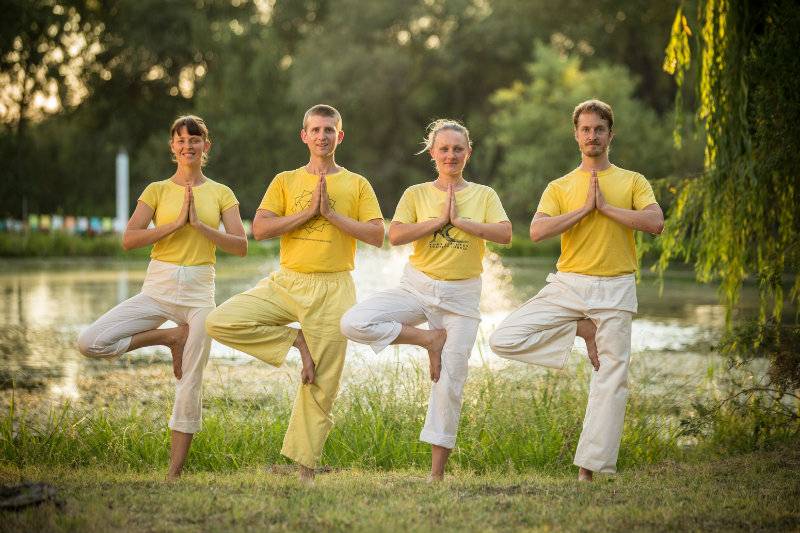
        Students practice yoga near the pond during a Yoga Vacation.
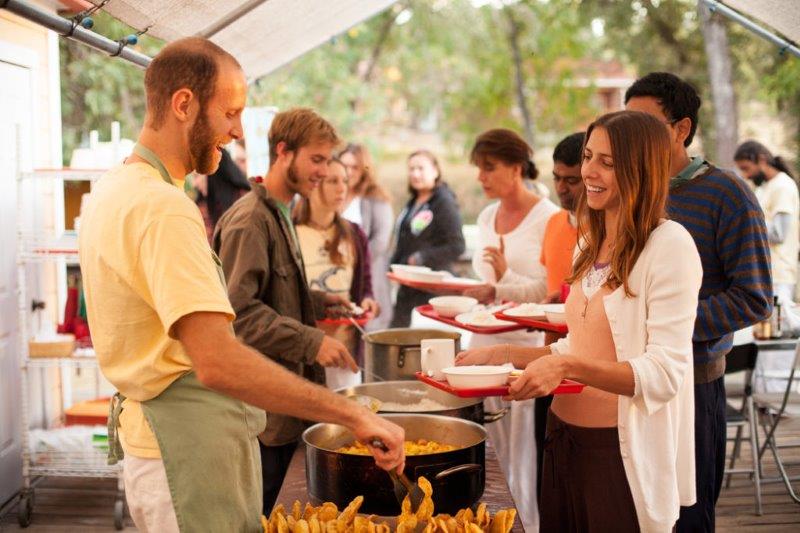
        Yoga Vacation guests talk and laugh while eating a delicious meal.

        Please call or email us to redeem this offer:

        Click here to view our full program calendar. 

        Gaining Self Awareness

        Gaining Self Awareness

        Gaining Self Awareness

        by Swami Sitaramananda

        Swami Sitaramananda

        Swami Sitaramananda

        Yoga Farm Director

        Swami Sitaramananda is a senior disciple of Swami Vishnudevananda and acharya of the US West Coast centers and Ashram.  Swamiji is also the acharya of the Sivananda mission in Asia, especially in Vietnam, where she hails from.

        Why is Self awareness important?

        Spiritual insights go beyond the workings of the mind and intellect. The function of self awareness is fundamental for healing. 
        Begin with awareness of breath. Bring your awareness to the present moment, which is perfect in itself, with slow and smooth breathing without effort.
        Turn within and feel heart/soul intelligence and start to trust it. Diminish the ego that feels separated and alone in the experience of a larger reality or group consciousness.
        Self awareness implies spiritual healing, connection with the Divine. 

        Self Awareness Tools

        • You are not alone
        • No more blame, guilt, anger, resentment, despair, rejection, self-pity or self-victimization
        • Practice gratitude
        • Do not accept the imperfect self, the ego, the idea of who we are
        • Acceptance that on another level, we are perfect and untouched by all of what is happening
        • There is peace and contentment by accepting everything and loving everything
        • not reject anything
        • Do not thinking that something is better
        • Limit the running towards and away from anything
        • Breathe into pain, physical or mental
        • Dissolve the pain in acceptance
        • Stay calm in all conditions
        • Everything is perfect as it is
        • Adopt a policy of not complaining
        • Adopt a smiling attitude, cooperation, flexibility
        • Let go of control
        • Let go of fears (that come from attachment)
        • Let go of anxieties


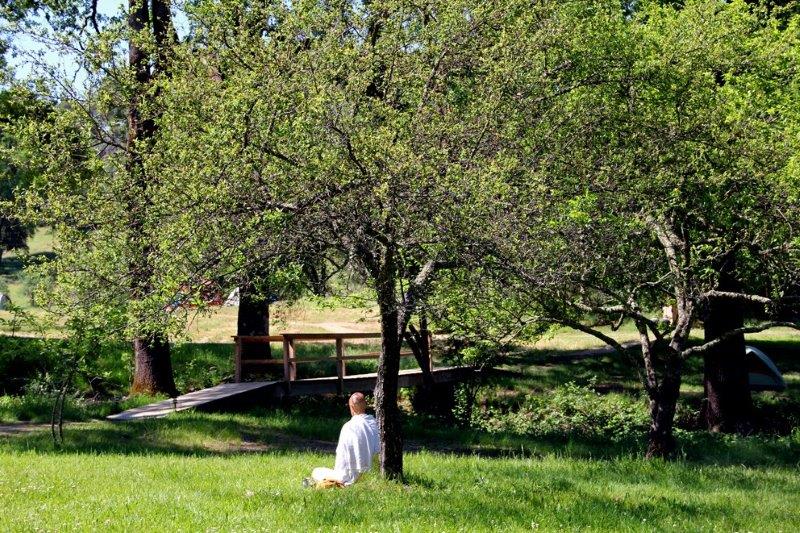
        meditation under a tree
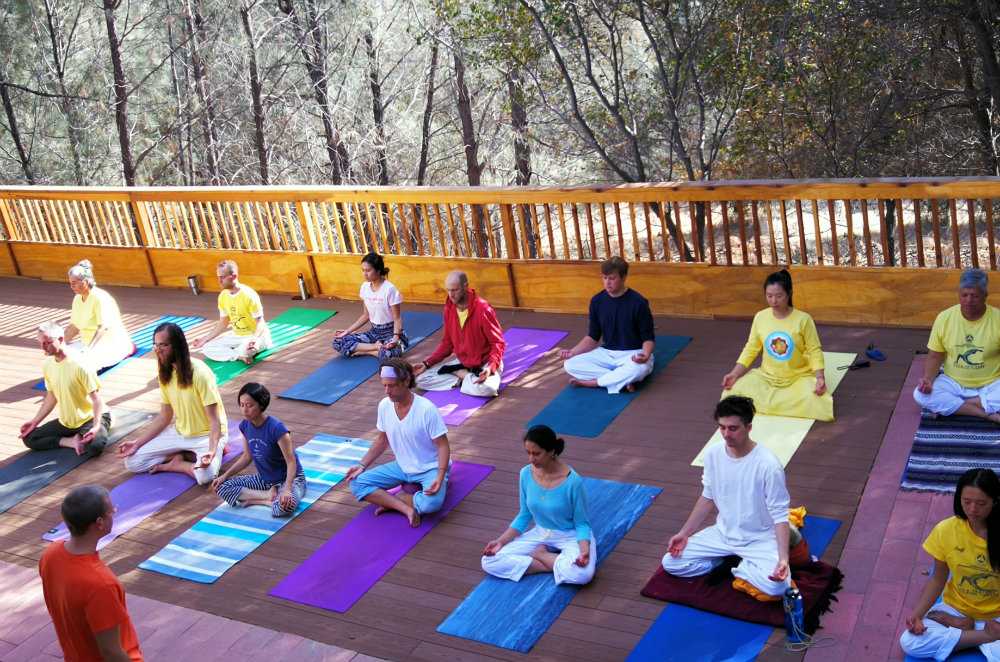
        group sitting meditation
        group pranayama in a row
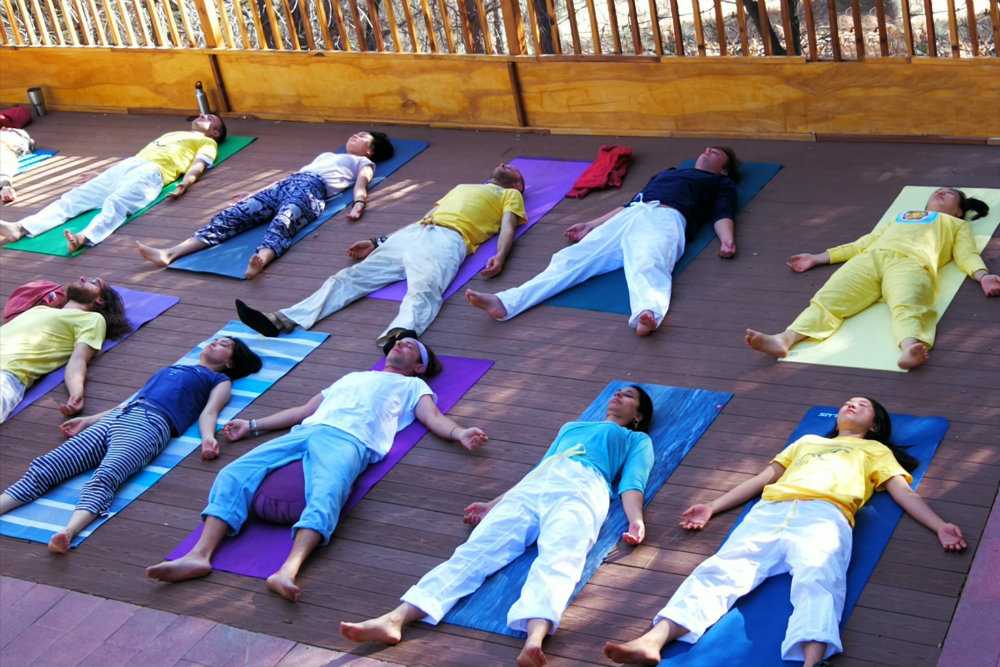
        group lying savasana corpse pose

        Self awareness skills

        • Faith in one’s capacity of healing
        • Faith in God or Nature the healer
        • Faith in the doctor or therapists
        • Increase trust in oneself and others
        • Avoid excessive suspicion and anxiety
        • Eat with faith and confidence that the food is nourishing
        • Pray before eating
        • Bless the food and the cooks
        • Keep an object/image that reminds yourself of the Indweller
        • Repeat mantra with faith
        • Read spiritual scriptures and have faith in the teaching and in the teachers
        • Dare to do things are not in your comfort zone, such as trying a new posture, a new endeavor, and having faith it will workout

        Awareness of Self

        Self love turns the love that is addressed to others to the love of one’s divine Self. The patterns of attachments and disillusions thereof are fundamentally changed as we live and let live and find one’s place in life and destiny.
        • Detect patterns of attachments
        • Excessive attachments to something external shows lack of self love
        • Take time for yourself
        • Enjoy life
        • Practice self affirmations and also learn to appreciate others
        • Avoid comparing yourself to others
        • Avoid wasting energy on something you can not change
        • Be ready to change something that needs to be changed, and know the difference
         

        Conclusion

        Self awareness brings responsibility. Take the necessary steps either by taking the medicine, do the exercise, eat properly, meditate, but with the idea that you are performing duty to the body as a temple and not with the idea of the outcome.

        Self awareness goes beyond death and disease.  The immortal Self, the Atman is diseaseless, deathless, birthless.  It is only the karmas that are playing out in the individual life. Once the karmas are understood, the individual becomes ready for anything and finds peace.

        © Swami Sitaramananda 2018 – No part of this article may be reproduced in any form without the written permission of the author.

        Yoga Teacher Training Course

        Check out our 200-hour Yoga Alliance certified Yoga Teacher Training Courses offered twice a year in California, 3x in Vietnam, once in China and once in Japan.

        Foundational Courses

        Choose from upcoming courses for beginners and intermediate level students.

        Yoga Vacation

        Rejuvinate your body and mind. Experience and progress with daily Yoga classes. Learn the 12 basic asanas and pranayama. Enjoy daily meditation, chanting, and organic vegetarian meals.

        Rejuvenate Your Being

        A Yoga vacation is an ideal getaway to change perspective towards one’s life and become healthier, more relaxed and connected.